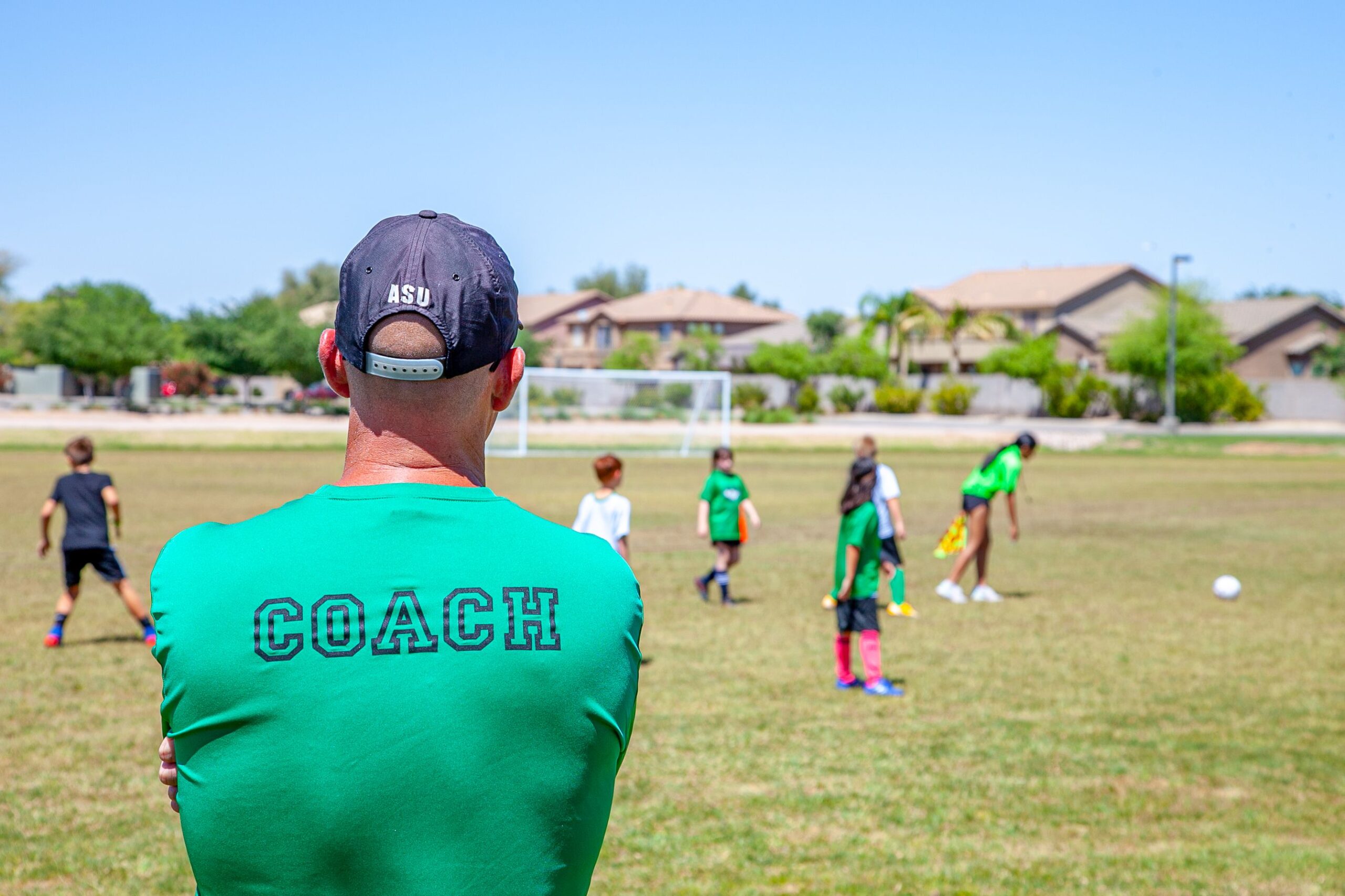
Every season, there was always a moment when I look out on the field or the court and recognized that my child’s volunteer coach has taken on a huge responsibility. No matter what I thought of their coaching skills, I had to acknowledge that this coach wasn’t just a volunteer. They were a parent, a professional, a student—someone with a full life who still choose to show up, week after week, for my child and everyone else’s.
Most volunteer coaches in youth sports aren’t doing it for recognition—they’re doing it because they want to give back and support a program that benefits the youth in the community. And the truth is, youth sports depend on these volunteers—without them, many teams and leagues simply wouldn’t exist. (ResearchGate).
I learned that supporting my child’s volunteer coach wasn’t just about being kind. It was about sustaining an important part of our community that directly shaped my child’s experience in sports and beyond.
The Hidden Weight Volunteer Coaches Carry
Have you ever noticed that the parents who complain the loudest have never volunteered themselves? These complainers aren’t bad people, but they clearly have no idea what is involved in volunteering. If they knew, they probably would give the volunteer coach a little grace. To fully appreciate your child’s volunteer coach, you must understand what the role demands.
Before a coach even steps on the field they have likely attended an orientation in which they were advised of the organization’s objectives, goals and their coaching responsibilities. Then, many leagues require their volunteer coaches to complete a pre-season training program. (ResearchGate). Volunteer coaches often supplement this training with their independent research about youth coaching and skill training.
Once team activities start, they hit the ground running…figuratively and literally. Coaches are preparing for and organizing practices, teaching skills, managing communications, navigating team dynamics, and responding to a steady stream of questions and complaints from parents. The pressure does not let up until the season ends.
It’s a role that often feels like a second job—except it’s unpaid and largely unappreciated. Volunteer coaches assume the responsibility for the success of the team experience often with limited training and support from leagues and their community.
That’s a lot to carry for someone who simply raised their hand to help.
How Parent Pressure Builds (Even When It’s Unintentional)
Things often become complicated with parents. Not because parents don’t care, but because they care so much. This often results in parents expressing their opinions in a negative way to their volunteer coach, to other team parents and even to their own child.
“Negative parent behavior is one of the top stressors for volunteer coaches. …Research consistently shows that sideline behavior is a leading driver of coach turnover.” (Fieldhouse)
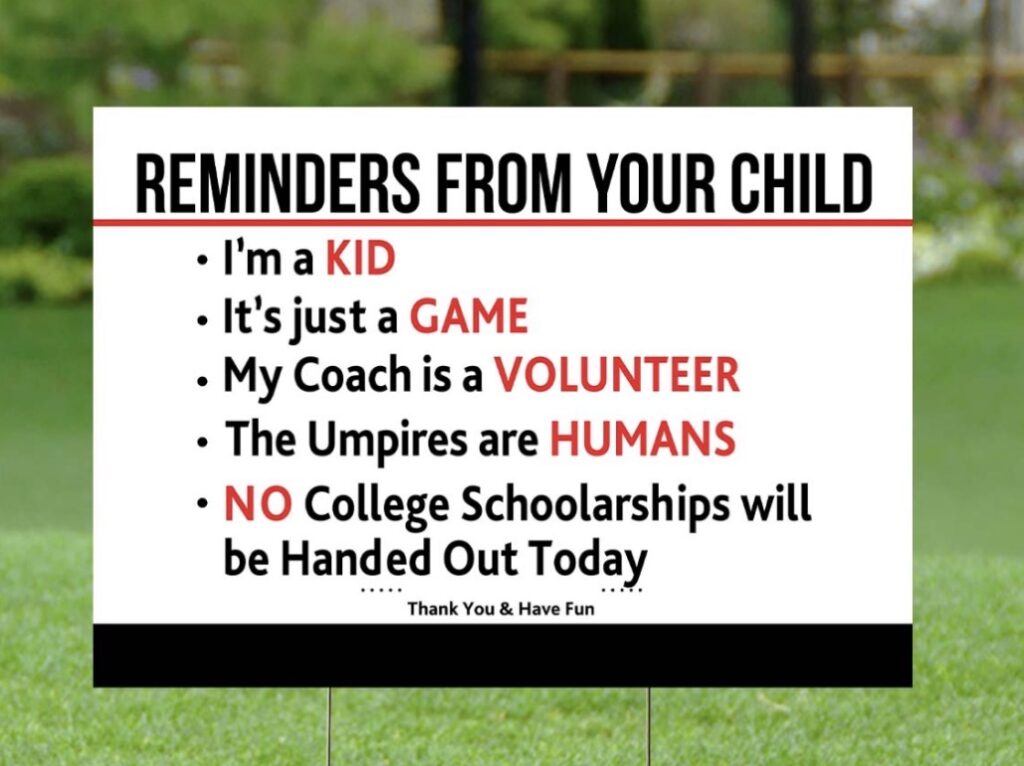
What parents need more than anything is perspective. That’s why I love the sign at the top of the section. It should be posted at every field, court, and rink where youth sports are played. It’s a reminder that your child just wants to have fun. And the best way to insure they keep playing sports is to make it enjoyable by supporting the person making it possible: their volunteer coach.
It’s natural to focus on your own child—whether they’re improving, getting enough playing time and feel encouraged. Those concerns are valid, but when every parent brings them to the volunteer coach or expresses them with other parents, it creates a constant layer of pressure that negatively impacts the team culture.
When parents complain about the volunteer coach to their kids, they quietly undermine the relationship their child has with that coach. A child who hears constant criticism begins to question the coach’s authority, tune out instruction, and lose trust in the person meant to guide them. That shift can drain the fun from the experience and weaken a child’s motivation to participate, improve, and stay engaged with the team.
Why Supporting the Volunteer Coach Helps Your Child
Youth sports play a major role in the lives of our nation’s youth. The National Council on Youth Sportsestimates that more than 35 million youth between the ages of 8 and 19 participate in some form of youth sports each year, representing 66% of boys and 35% of girls in the U.S.
“It is not surprising that the research overwhelmingly points to a connection between positive, supportive parental involvement and a child’s level of enjoyment and success in the sport he or she is playing.” (National Academy of Athletics) Supporting your child’s volunteer coach isn’t separate from supporting your child—it’s directly connected.
The relationship between a coach and their athletes plays a critical role in shaping a child’s experience. The Rutgers Youth Sports Research Council emphasizes that “coaches are the single most important determinant of the quality of the youth sport experience.”
When coaches feel supported, they’re more patient, more focused, and more effective. When there are scrutinized and overwhelmed, the environment shifts—and kids feel that shift immediately. It becomes less enjoyable for everyone involved including your child.
Moreover, “Burnout … is one of the biggest threats to volunteer sustainability.” (VolunteerPro). If volunteer coaches burn out or feel unsupported, fewer people step into those roles. And when that happens, opportunities for your child shrink.
What Giving a Volunteer Coach a Break Really Looks Like
You can always recognize the teams where things are working. The energy feels different. Parents support each other. Coaches feel valued. Kids are engaged and enjoying themselves.
It’s not because everything runs flawlessly—it’s because everyone understands their role in making the experience positive. The volunteer coach isn’t treated like a service provider, but like a key part of a shared community.
Parental support is a huge component to the success of a team lead by a volunteer coach. Here are 5 things you can do to support your child’s volunteer coach:
1. Offer Your Help
Youth sports were never meant to be a one-person operation. When parents step in to help it changes everything. The best way to support a volunteer coach is to take something off their plate of responsibilities.
For example, administrative work consumes a significant portion of a volunteer coaches’ time. “Research confirms that “the typical volunteer coach spends roughly 36% of their coaching time on administrative work: scheduling, rosters, parent communication, and logistics. That is a third of their volunteer hours spent not coaching.” (Fieldhouse)
Ask your volunteer coach if you can help by handling an administrative task or any other. Your help does not have to be formal or grand. You can help to wrangle the kids or make sure all the equipment is collected and accounted for at games and practices.
Every extra hand is needed and appreciated. Then your volunteer coach no longer carries the full burden alone, and the team becomes what it was meant to be: a shared effort.
2. Let Go of Perfect
Volunteer coaches will not be perfect. Some are inexperienced and learning as they go. They will make mistakes. That’s part of the reality of volunteer-driven programs.
But those imperfect moments are often where real growth happens. If you feel your child isn’t learning the skills they need or getting the playing time they deserve, use it as a chance to teach them how to handle disappointment. Encourage them to work hard and keep improving. Practice with them in the backyard or arrive a little early to get extra reps in. They’ll enjoy the time with you—and they’ll get better.
Kids will learn how to adapt, how to handle disappointment, and how to move forward. When parents shift their focus from perfection to effort, it takes pressure off everyone and creates a healthier, more productive environment.
3. Don’t Bad Mouth the Volunteer Coach in Front of Your Child
Children learn by watching their parents. They notice everything—your tone, your reactions, every side comment. When they hear you criticize the volunteer coach, it shapes how they respond to authority, adversity, and teamwork.
Your child will often take their cue from you, and their attitude toward the volunteer coach—and the team—can turn negative. Over time, they may lose interest in the team or, worse, in competitive sports altogether.
On the other hand, when they see respect and appreciation, those values stick. Supporting the coach isn’t just about making the season smoother—it’s about modeling behavior and keeping your child engaged and motivated throughout the season and beyond.
4. Say “Thank you”
This may seem obvious, but you would be surprised how many parents and youth athletes never express their appreciation to their volunteer coach. Volunteer roles can feel thankless—especially when feedback only shows up after something goes wrong. That’s why a simple “thank you,” particularly when it comes from your child, can matter so much.
A kind word after a game or a quick message acknowledging the coach’s effort can shift the entire experience. When people feel appreciated, they stay engaged. When they don’t, they step away.
5. If you have nothing nice to say….
If you can’t or won’t do any of the above… just bite your tongue and say nothing. We have all been in the stands with parents who criticize and complain about the coach throughout practices and games. It’s hard to resist but it can really change the entire team atmosphere. Before you know it, other parents join in and negativity spreads among the adults who should be supporting the volunteer coach.
Recognize that most coaches are already evaluating themselves and trying to improve without external pressure piling on. Replace a negative comment with a positive one by cheering louder for the team if you need to hear your own voice. But complaining publicly instead of being supportive is a missed opportunity to better the environment for your child and everyone else’s.
The Bigger Impact on Youth Sports
The ripple effect of supporting volunteer coaches goes far beyond a single team. Youth sports help children build life skills like teamwork, leadership, and perseverance. Participation in these programs plays an important role in childhood development, and many leagues rely almost entirely on volunteers to operate.
But those benefits depend on the environment kids experience every practice and every game. That environment is shaped by the volunteer coach—and by the parents and community surrounding them.
When you support your child’s volunteer coach, you strengthen your community, create a better learning environment and promote an enjoyable experience for your child in sports. That is the most reliable way to inspire in your child a love of the game that brings them back season after season.