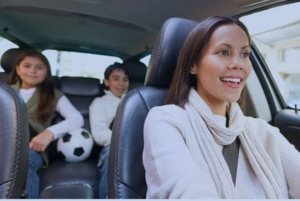
There’s a particular task of motherhood that often goes unnoticed. It’s not acknowledged in Mother’s Day cards or highlighted in social media posts. It looks like a packed SUV, a calendar full of practices, rehearsals, games, and hangouts, and a purse stuffed with granola bars and mini pretzel bags. It sounds like chatter drifting from the backseat and music playing just a little too loudly.
It’s being the mom who drives. That was me. I drove everyone’s kids everywhere. If your child was an acquaintance of one of mine, they were in my car at one point. Maybe it was because I drove a large SUV or because I didn’t speak much or simply because I never said “no.”
At first glance, transporting children seems like a necessary part of motherhood — a chore or a matter of convenience. But over time, something deeper happens. When you are the one regularly driving your child and their friends, you aren’t just transporting kids from one location to another. You are stepping quietly into the center of their world.
And that position carries more benefits than most of us realize.
A Front-Row Seat to Their Real Lives
Something about car rides changes the way kids talk. Maybe it’s the fact that no one makes eye contact or the gentle rhythm of the road or that they simply forget you’re there.
Whatever the reason, the backseat becomes a confessional.
Clinical psychologist Dr. Lisa Damour explains, “Adolescents often talk more easily when they’re not the center of attention.” She frequently encourages parents to take advantage of side-by-side moments — like driving — rather than face to face conversations because teens tend to open up when they feel less scrutinized.
A car ride creates exactly that environment — low pressure, natural, unforced.
During a routine car ride, you hear the real stories. You learn about who broke up with whom, which teacher embarrassed someone in class and who is getting more playing time than they deserve. You notice who dominates conversations and who stays quiet. You observe how their friends treat one another.
These insights don’t come from interrogations at the dinner table or formal check-ins before bedtime. They arrive in the car organically, woven into casual conversation.
In those moments, you’re not prying. You’re present. And presence gives you awareness that allows you to guide gently.
Becoming the Trusted Adult
Over time, a subtle shift happens. Your child’s friends begin to see you differently. You become a familiar, steady presence in their lives. A dependable safe adult who isn’t their parent but shows up consistently. That consistency builds trust — not just with your own child, but with their peers.
According to the Child and Adolescent Behavioral Health Agency: “Trusted adults are viewed by children or adolescents as a safe figure that listens without judgment, agenda or expectation…” and, “ children might feel better talking to trusted adults who are not their parents.” https://www.childandadolescent.org/trusted-adult
When you are the mom who drives, you become one of those trusted adults.
If a situation ever feels uncomfortable, if a plan changes unexpectedly, or if a child feels unsure, they can find comfort in the knowledge that you will be there and they will be safe.
I drove kids home from gatherings that became too uncomfortable to stay at for a variety of reasons like bonfires in the middle of the woods that ended because of a thunderstorm, parties that became dangerous because of the arrival of a bad element and sleepovers that were cancelled in the middle of the night because parents suddenly decided that they didn’t want kids sleeping at their house.
I also became a reliable ride home for kids whose parents forgot to pick them up from practice or had a flat tire or suddenly had an emergency with other kids.
You may never know how you relieved a child’s anxiety or the negative consequences they avoided because you were there. But as a trusted adult, your presence matters more than you see.
Teaching Without a Lecture
What you do with the knowledge you gain and the trust you build during those car rides is truly powerful. You will get the rare opportunity to be the one who teaches, and guides in a child’s moment of need.
Research cited by The National Alliance on Mental Illness emphasizes that trusted adults provide an important benefit to the well-being of children. “[T]his kind of relationship can have a positive impact on physical, mental and social outcomes for children… They offer opportunities for prevention and intervention around issues that impact youth mental health.” https://www.nami.org/kids-teens-and-young-adults/be-a-trusted-adult-for-young-people-in-your-life/
When kids in your car are troubled with the worries of the day, they may feel comfortable discussing it during a routine car ride.
When my son was in elementary school, I was driving him and a friend to basketball practice when I overheard their conversation. His friend was very upset because a boy on the team made fun of him for being pulled out of class for extra help in reading. He was embarrassed and self-conscious. My son replied with typical 3rd grade advice. “Well, he’s stupid, don’t listen to him. “
This car ride gave me the opportunity to provide more constructive guidance. I explained, “Everybody learns differently. We are lucky that our school has lots of teachers that can help everyone learn the way they learn best. One way of learning is not better than the other… it’s just different.”
He seemed happy and reassured with that explanation.
The trust you build as the mom who drives often spills into moments outside the car.
During my daughter’s tumultuous teen years, I was the mom who drives for her and her friends. During that time, she would often gallop into the room and say, “my friends want to know what you think about….” I was glad that they sought the advice of a trusted adult and took the responsibility seriously.
Being the mom who drives transformed me into a trusted adult and gave me the opportunity to guide without lecturing both in and out of the car.
Strengthening Community Ties
When you’re the mom who drives, you and your child become more connected to other families. Quick exchanges in driveways turn into longer conversations. Schedules intertwine; families begin sharing responsibility and supporting one another while friendships form.
My closest friends were the parents of the children I regularly drove from place to place. I got to know the children and their families which allowed for the free flow of communication and socialization.
The Centers for Disease Control highlights the importance of social connection which benefits all members of the community. “Staying connected to others creates feelings of belonging and being loved, cared for, and valued.” https://www.cdc.gov/social-connectedness/about/index.html
Your willingness to help by driving strengthens a web of support around your child. Other parents step in when you need help and your community feels smaller and safer.
The Bigger Meaning
When you are the one in the driver’s seat, you are not just managing logistics. You are positioning yourself close to your child’s social world. You are becoming a steady figure in the lives of other children.
The mom who drives communicates something powerful: I am here. You can count on me. It’s not about being the “cool mom.” It’s about being the reliable one.
Extended and repetitive car rides may seem tedious. But some of the most powerful parenting happens on the road between here and there. Within those miles are conversations, trust-building moments, subtle lessons, and laughter. You are shaping tone, building community, and offering safety in ways that may not be fully visible today.
One day the backseat will be quiet. The practices will end. The rides will no longer be needed.
But the trust you built, the guidance you offered and the memories you created will remain.